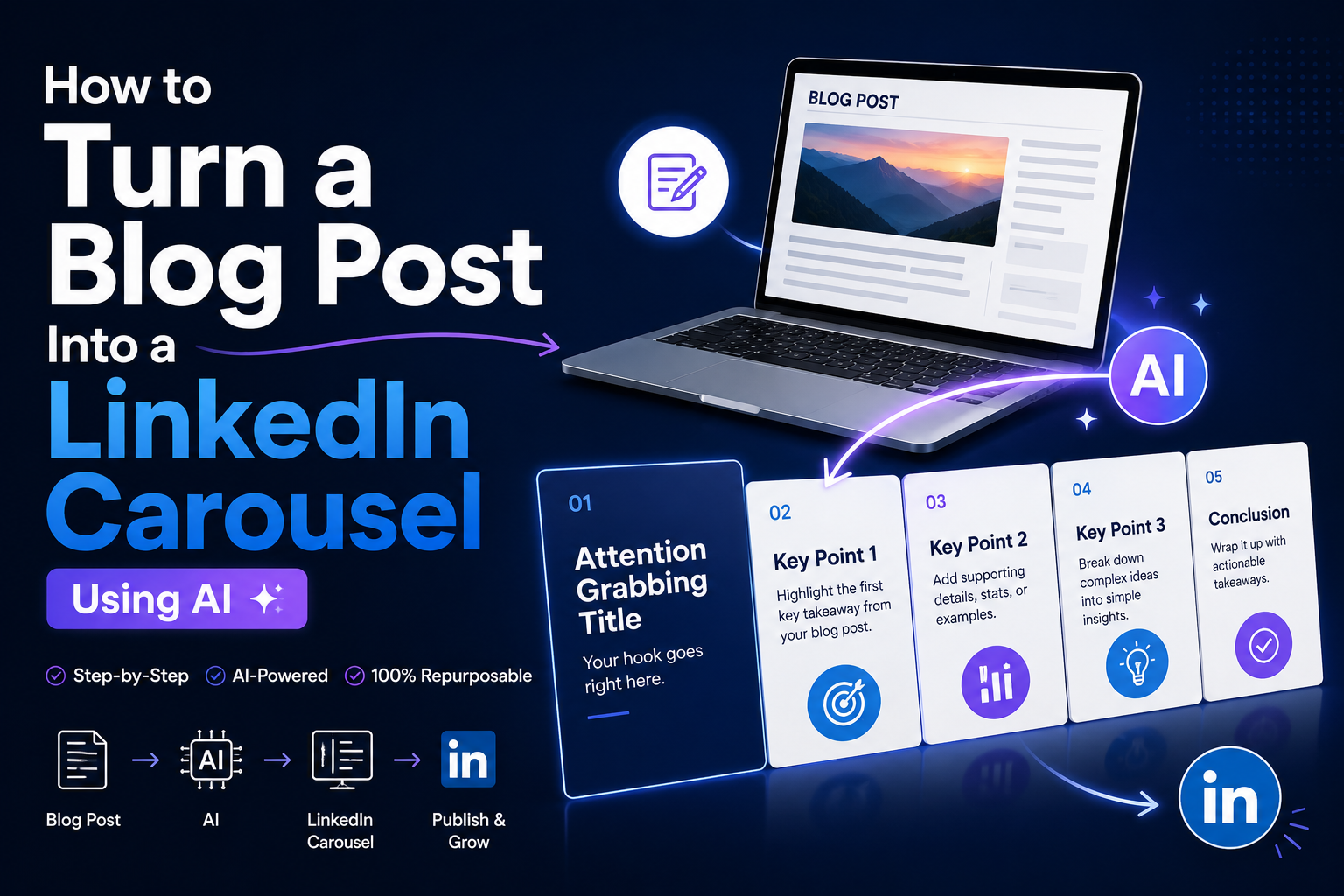
If you've ever spent hours writing a blog post only to watch it disappear into the void of your website's analytics dashboard, you're not alone. Most long-form content gets read once, indexed by Google, and then forgotten — even though the ideas inside it are still valuable. The smartest content creators in 2026 aren't writing more; they're repurposing better, and one of the highest-ROI ways to do that is by turning a blog post into a LinkedIn carousel.
Carousels consistently outperform single-image posts and plain text updates because they reward scroll-stopping behavior: each swipe is a micro-commitment, and LinkedIn's algorithm tends to favor content that keeps people on the platform longer. A well-structured carousel can take the core argument of a 1,500-word article and compress it into ten swipeable slides that get shared, saved, and commented on.
The good news is that you don't need design skills, a content calendar overhaul, or hours in Canva to make this work. With an AI content repurposing engine, the process takes minutes instead of hours.
Why Repurpose Blog Content Into Carousels?
Before diving into the how, it's worth understanding the why. Blog posts and carousels serve different psychological functions even when they share the same underlying information.
A blog post is a destination — someone has to actively search for it, click through, and commit to reading. A carousel is an interruption — it appears in someone's feed while they're scrolling for something else entirely, and it has about two seconds to earn their attention. That means the same content needs a completely different structure depending on the format: blog posts can build slowly with context and nuance, while carousels need a hook on slide one, a payoff by the final slide, and visual hierarchy that guides the eye without requiring effort.
Repurposing isn't about dumbing down your content. It's about translating it into a format-native experience. The core ideas, data points, and frameworks from your article are still valuable — they just need a new container.
Step 1: Choose the Right Blog Post to Repurpose
Not every blog post makes a good carousel. The best candidates share a few traits:
- List-based or step-based structure — "5 ways to," "how to," "the ultimate guide to" formats translate naturally into slides.
- A strong central argument or contrarian take — carousels thrive on opinions and frameworks, not just information dumps.
- Data or statistics — numbers make for visually compelling slides and tend to get saved more often.
- Evergreen relevance — pick posts whose insights won't feel dated in three months.
If your blog already has a "how-to" or "listicle" structure, you're halfway there before you even open a tool.
Step 2: Paste Your Content Into an AI Carousel Maker
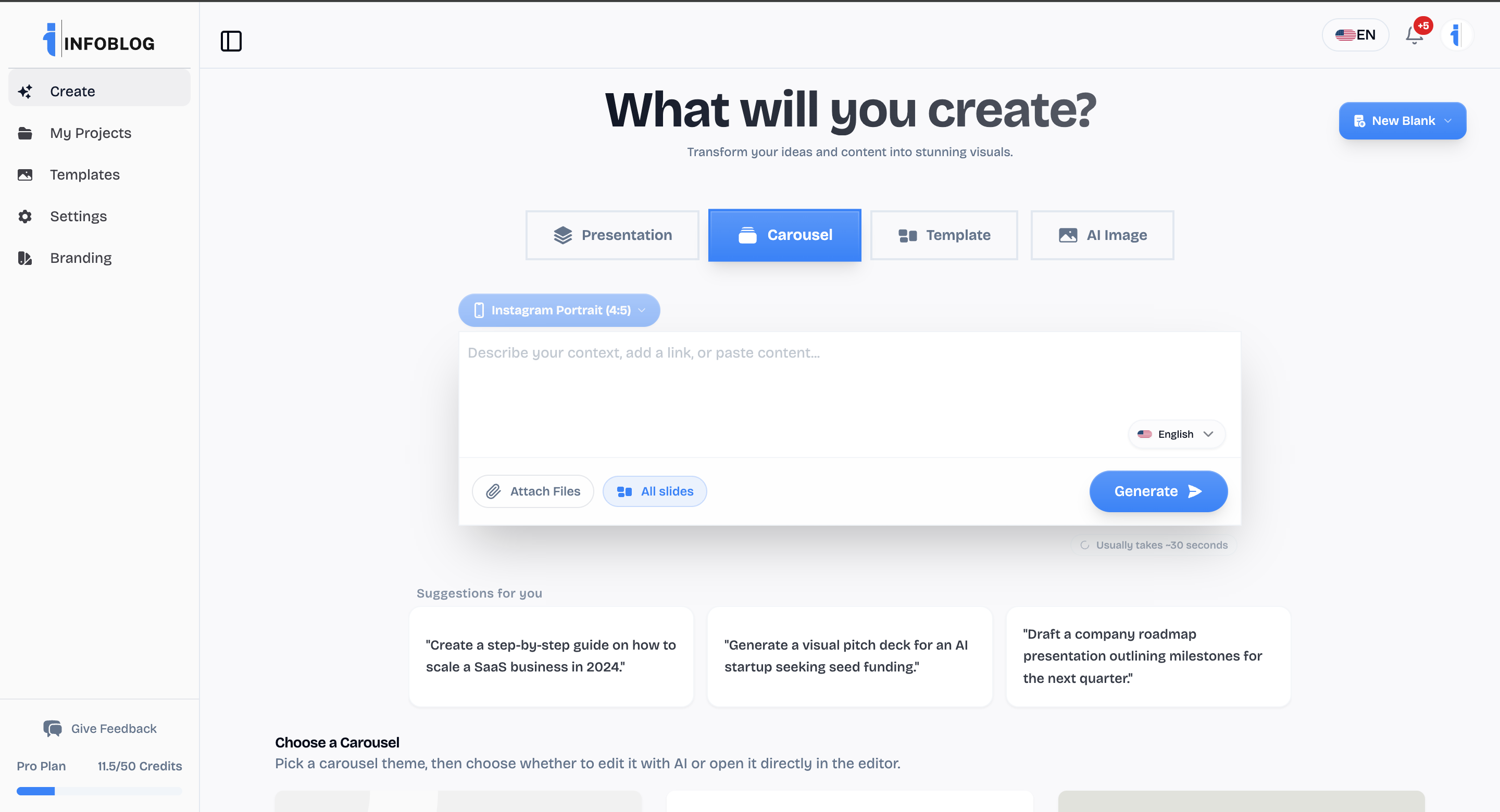
Here's what happens during AI content repurposing:
- Content extraction — the AI reads the full blog post (you can paste a URL, raw text, or upload a PDF) and identifies the core thesis.
- Narrative structuring — it breaks the article into a logical slide-by-slide sequence: hook, problem, insight, proof, and call to action.
- Visual design — each slide is automatically designed with appropriate typography, spacing, and layout based on a template.
- Brand consistency — colors, fonts, and logos can be applied automatically if you've set up a brand kit.
The result is a near-finished carousel draft that would normally take 1-2 hours to build manually in a design tool — generated in about 60 seconds.
Step 3: Refine the Slide Sequence
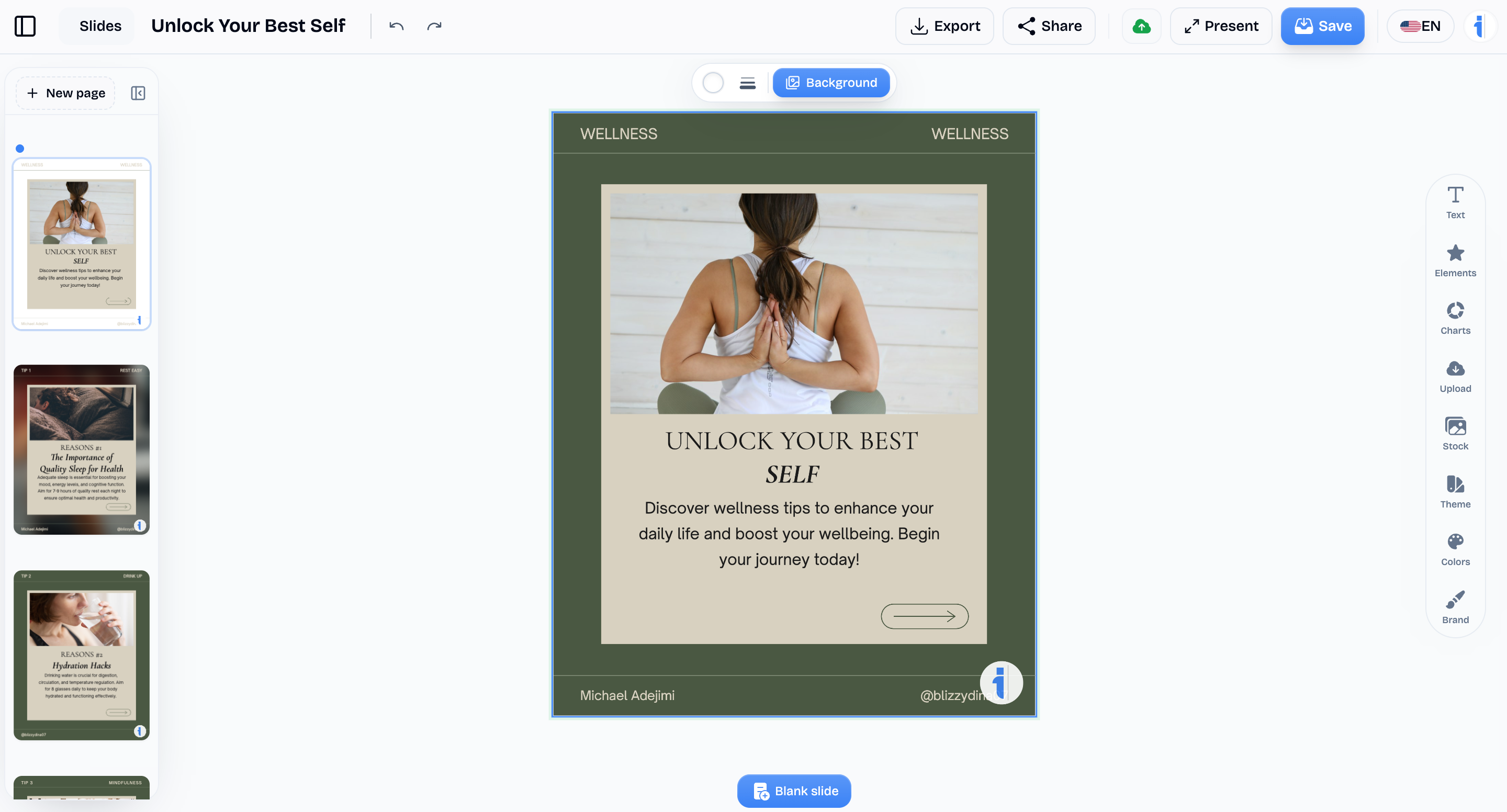
Even great AI output benefits from a human pass. Once your draft carousel is generated, review it for:
- Slide 1 (the hook): Does it stop the scroll? Strong hooks often use a surprising stat, a bold claim, or a relatable pain point.
- Slide order: Make sure the logical flow from your blog post translates into a narrative arc — not just a list of disconnected facts.
- Slide count: LinkedIn carousels typically perform best between 6 and 12 slides. Too few feels thin; too many causes drop-off.
- Final slide (the CTA): End with a clear next step — follow, comment, save, or visit a link.
Most AI repurposing tools allow drag-and-drop editing at this stage, so you're polishing rather than building from scratch.
Step 4: Customize With Your Brand Kit
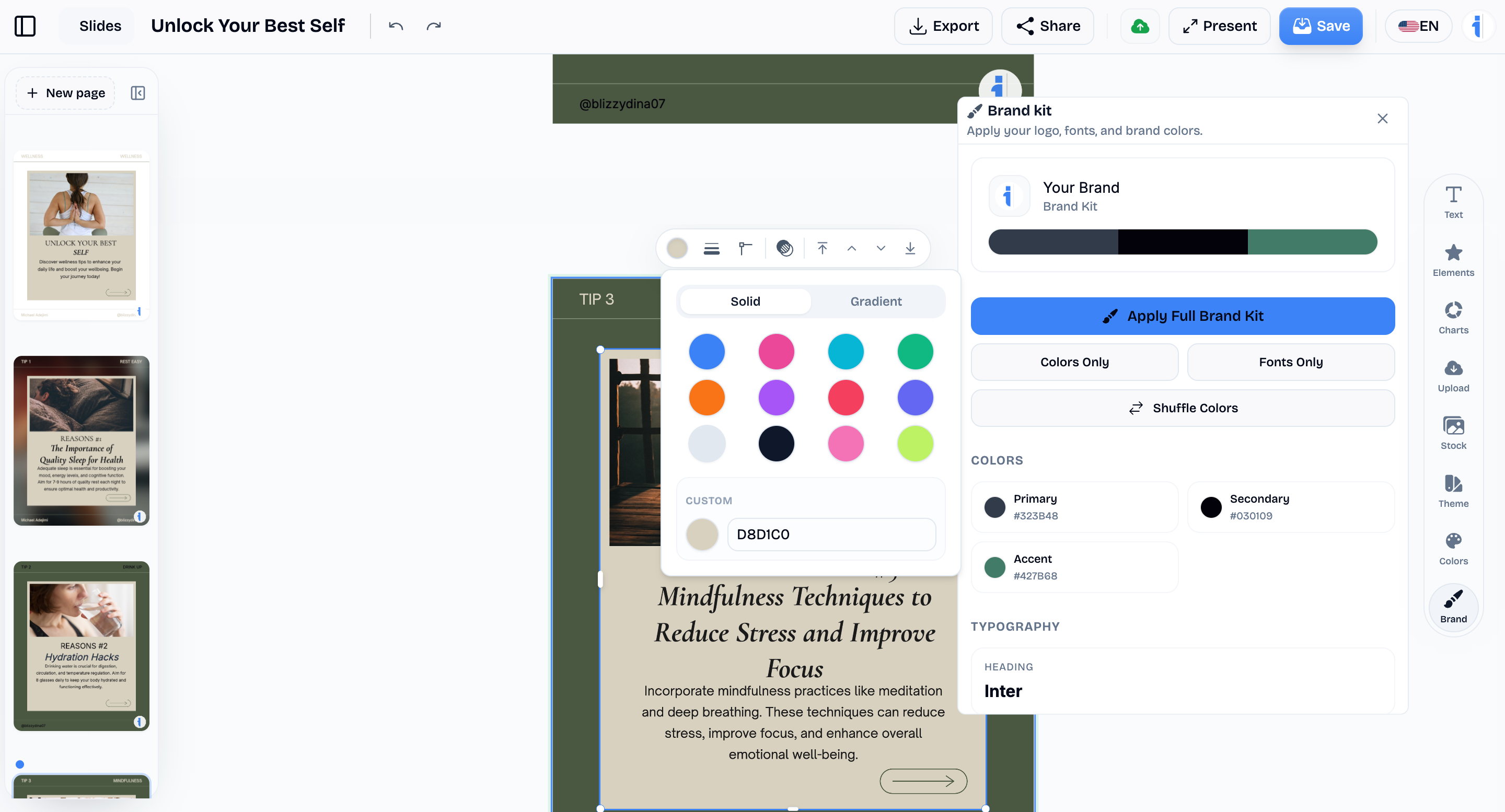
Consistency matters more than most creators realize. If your carousel doesn't visually match your other content, it can feel disconnected from your personal or company brand — even if the content itself is great.
A full editor with brand kit support lets you lock in your fonts, color palette, and logo placement once, so every future carousel automatically matches. This is also where AI text editing becomes useful: you can highlight any slide's copy and ask the AI to make it punchier, shorter, or more formal without rewriting from scratch.
Step 5: Export and Publish
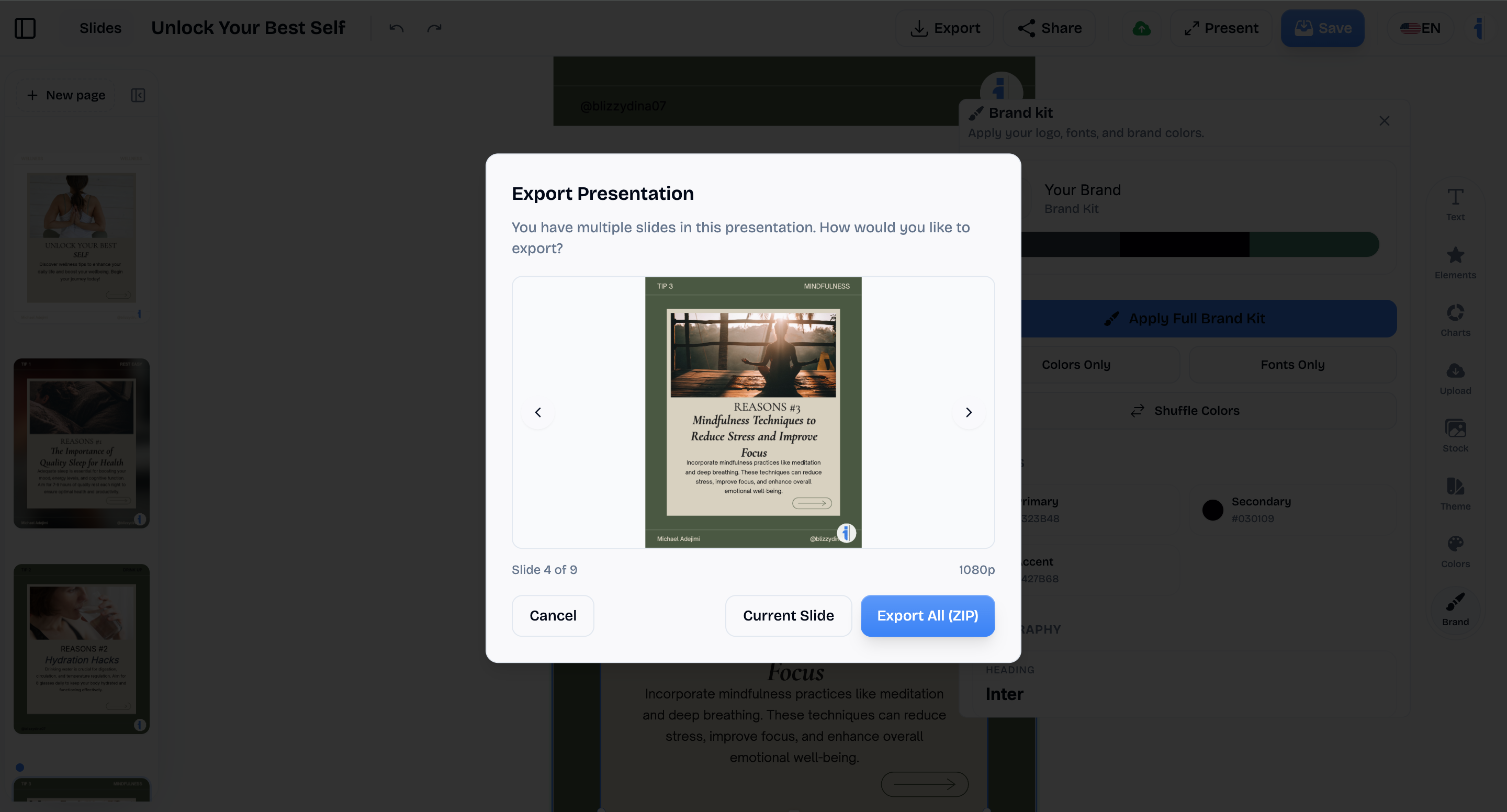
Once your carousel is finalized, export it as a PDF (the standard format LinkedIn carousels use) and upload it as a document post. A few publishing tips:
- Post timing matters — carousels tend to perform better during weekday business hours when professional audiences are active.
- Write a strong caption — the caption should add context, not just repeat slide one.
- Tag relevantly — mention people or companies referenced in your content where appropriate, but avoid over-tagging.
- Track performance — note which slide sequences and hooks get the most saves and shares, then apply those patterns to future carousels.
Beyond Carousels: Turning Blog Posts Into Presentations
Carousels aren't the only repurposing format worth considering. The same blog post that becomes a LinkedIn carousel can also become a client-facing presentation, a sales deck, or an internal training resource. An AI presentation maker https://www.trypekto.com/ai-presentation-maker follows a similar process — reading your content, extracting key points, and structuring them into a slide deck — but optimized for longer-form, more detailed slides rather than quick-scroll visuals.
This is especially useful for agencies, consultants, and B2B teams who write detailed blog content (case studies, frameworks, market analyses) and need that same research repackaged for a pitch meeting or a webinar.
Common Mistakes When Repurposing Blog Content
Even with AI doing the heavy lifting, a few mistakes can undermine your results:
Copying text verbatim onto slides. Blog sentences are written for reading, not skimming. Each slide should contain a condensed, standalone idea — not a paragraph from your article.
Ignoring the hook. The first slide is doing the job of a headline, a thumbnail, and an opening line all at once. Spend disproportionate time here.
Skipping the edit pass. AI-generated drafts are a starting point. The creators who see the best results treat the AI output as a first draft, then spend five minutes refining tone and flow.
Forgetting the call to action. A carousel that ends on information with no next step wastes the engagement it just built.
Final Thoughts
Repurposing a blog post into a LinkedIn carousel isn't about cutting corners — it's about meeting your audience where they already are, in the format they're already primed to engage with. What used to require a separate design workflow, a few hours, and a learning curve in tools like Canva can now happen in the same amount of time it takes to make coffee.
If you've got a backlog of blog posts sitting on your site collecting dust, that's not wasted content — it's a content calendar's worth of carousels and presentations waiting to be unlocked. Paste your first article https://www.trypekto.com/ and see how it looks as a carousel in under a minute.